-

One of the major gaps in financial literacy in Bulgaria is not so much our ability to save, but rather long-term financial planning and the way we manage the savings we have accumulated. This is one of the key points made by Rossitza Wartonick, founder of the Financial Literacy Initiative Foundation and Bulgaria’s National Financial Literacy Ambassador, in a Mediapool article exploring investment culture, financial literacy and the
-
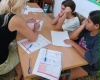
When we really want something, where does the journey towards it begin? By deciding what truly matters to us, setting a goal and making a plan to achieve it.
That is exactly the kind of journey the children in the village of Pavolche set out on on 12 August, together with Rumi Vitnyova from the Initiative for Financial Literacy Foundation (FLI). At the local community centre, she led the “Savings Journeys” financial education
-

Rossitza Wartonick, Founder and Director of the Financial Literacy Initiative Foundation, has been appointed as one of Bulgaria's National Financial Literacy Ambassadors under the European Commission's initiative to establish a European network of National Financial Literacy Ambassadors.
The network is one of the key initiatives of the EU Financial Literacy Strategy, adopted by the European Commission in 2025 as part of the Savings and
-
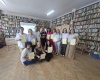
On 6 July 2026, librarians and community centre professionals from the Kardzhali region took part in the training programme "Engaging Community Activities in Libraries and Community Centres", developed by the Financial Literacy Initiative Foundation. The training was hosted by the Nikola Y. Vaptsarov Regional Library in Kardzhali.
The programme aims to support libraries and community centres in their role as vibrant spaces for learning, social
-

How do we teach financial literacy in a way that helps students build not only knowledge, but also the skills and habits needed to make sound financial decisions?
This question was at the heart of the training program "First Steps into the World of Personal Finance: Innovative Approaches to Teaching Financial Literacy and Entrepreneurship", jointly delivered by the Financial Literacy Initiative Foundation and Education 5.0 Foundation for
-

The World Children Are Growing Up In
Today’s children can hear advice about cryptocurrencies on TikTok before they even learn what interest is. They shop online in just a few clicks, use digital payments, and are constantly exposed to content about “easy money,” investing, and getting rich quickly.
Financial decisions are now everywhere around us — in our phones, social media feeds, online games, advertisements, and
-
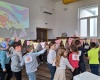
How do you create a national movement for financial literacy? Not through a series of lectures. Not through an advertising campaign. But through hundreds of children stepping onto the stage in their school, library or community centre and turning learning into a shared experience for the whole community.
This is exactly what lies at the heart of the national initiative “Let’s Set the Money Carousel Spinning – Together!”,
-

With emotion, applause, and a great deal of inspiration, the national initiative “Let’s Spin the Money Carousel – Together!” came to a close, bringing together students, teachers, and communities from across the country. At an official ceremony held on April 24 at the Slavyanska Beseda Theatre, awards were presented to the distinguished participants.
The ceremony gathered partners and participants from all over the
-

A training session on “Financial Literacy in the Digital Age” was held at Sofia City Library, bringing together librarians and community cultural workers from across the region.
The session covered key topics related to personal finance management, risks in the digital environment, and ways to protect against financial fraud. The training was led by Rossitza Wartonick and Rumyana Vitnyova from the Financial Literacy Initiative
-
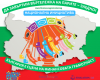
With the start of Global Money Week, taking place on 16–22 March 2026, performances of the educational theatre production “The Money Carousel” are beginning across dozens of locations throughout the country. Schools, community centres (chitalishta), and libraries are turning into stages where children present lessons about money and life through theatre. These performances bring together students, parents, and members of the
-
On 17 February 2026, the online discussion “The Money Carousel – Practical Aspects of Implementing the Educational Theatre” brought together over 100 teachers, school principals, and representatives of schools, community centres (chitalishta), libraries, and municipalities from across the country. The meeting aimed to support participants in the initiative “Let’s Turn the Money Carousel – Together!” in
-

If you have already registered to take part in the initiative “Let’s Spin the Carousel of Money – Together” or are considering joining, this online discussion will be truly valuable for you.
To support participants, the organisers of the initiative – the Financial Literacy Initiative Foundation and Education 5.0 Foundation – will host an online discussion focused on practical aspects of
-
On 26 January 2026, the national initiative “Let’s Turn the Money Carousel – Together!” was officially launched, aiming to transform financial literacy into a shared experience for children and communities across the country. The initiative is dedicated to Global Money Week (16–22 March 2026)—an annual campaign of the International Network on Financial Education (INFE) of the Organisation for Economic
-

The biggest mistake parents can make is to satisfy their children’s every whim. This fosters an attitude toward money as something given and automatically available, disconnected from effort, planning, and choice. This was commented on for BNR by Rositsa Wartonick, founder and director of the Financial Literacy Initiative Foundation, in an interview for the “Before All” program on BNR-Horizont.
“One of the main long-term
-
In a BNT report dedicated to financial literacy in schools, student activities conducted using the materials of the Financial Literacy Initiative Foundation (FLI) were presented. The students worked on the topic of saving through our workshop “Saving Routes”, which is part of the programme “About Money and Other Important Things”.
The inclusion of our resources in classroom lessons is further proof of their practical
-
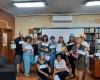
On 14 July 2025, community centre staff and librarians from Kardzhali Region completed training under the programme “Financial Literacy in the Digital Age” of the Financial Literacy Initiative Foundation (FLI) at the “N. Yl. Vaptsarov”Regional Library, Kardzhali.
In the form of games, lecturers from the Financial Literacy Initiative Foundation (FLI), Rositsa Vartonik and Rumyana Vitnyova,
-
#FLI #financialliteracy #children #games #training
Another “adventure” was created by the Financial Literacy Initiative Foundation (FLI), Rositsa Vartonik, and Rumyana Vitnyova for the children attending the summer workshops at the community centres in the village of Pavolche and the town of Krivodol. As a reward for the themed game about the Bulgarian National Bank (BNB), “Discover the
-

#FLI #financialliteracy #children #games #training
The summer activities on financial literacy with children from the community centres in the village of Pavolche and the town of Krivodol continue – NCh “Far 1930” and NCh “N. Y. Vaptsarov”. On 20 August, Rositsa Vartonik and Rumyana Vitnyova conducted the interactive game “Discover the Treasure”, developed by the
-
financial literacy, children, games, summer, community centre
A fun and useful activity for the children from the “Razvitie” club at the “Razvitie-1869” Community Centre in Vratsa was conducted by Rumyana Vitnyova from the Financial Literacy Initiative Foundation (FLI) on 10 July 2024. The children participating in the “Book Summer” programme learned how to manage money
-

A large proportion of 15-year-old children in Bulgaria have bank accounts and use debit cards. The level of financial literacy among Bulgarian students is below average, the PISA tests showed. With an average score of 498 points, Bulgarian students scored 426.
“Financial literacy education itself is not systematically integrated into school curricula, and conversations with parents on this topic are also important. Children need to learn
-

On 26 March 2024, community centre staff and librarians from Pazardzhik Region completed training under the FLI programme “Financial Literacy in the Digital Age” at the “Nikola Furnadzhiev” Regional Library in Pazardzhik.
In the form of games, lecturers from the Financial Literacy Initiative Foundation (FLI), Rositsa Vartonik and Rumyana Vitnyova, discussed the importance of financial
-

#financialliteracy #success #innovation #fintech #students
Innovation, motivation, broad outlook, and teamwork skills – all this and much more were demonstrated by the participants in the Financial Literacy Academy 2024. For nearly a week (3–9 March), they worked on their ideas for innovations in the field of digital financial services and financial literacy, attended engaging lectures, responded to intriguing challenges, and built
-

The Education 5.0 Foundation, in partnership with the Financial Literacy Initiative Foundation (FLI), “Angel Kanchev”University of Ruse, and the “Successful People” club at “Baba Tonka” High School of Mathematics, Ruse, are organising the Financial Literacy Academy, which will take place from 6 to 9 March 2024. The general sponsor of the initiative is DSK Bank.
The aim of the Academy
-
Financial literacy is a fundamental life skill, and its importance is growing
Financial literacy is globally recognised[i] as a fundamental life skill in the 21st century, which is essential for achieving and maintaining the financial well-being of individuals and society. Its growing importance is driven by a number of factors: changes in social systems and the transfer of risks to individuals; the increasing diversity and complexity of
-

New year, new beginning—this is often the mindset with which we start the year. We promise ourselves to live healthier lives, to be more financially sensible, to be better and more generous, to find time for the people close to us… Whether we keep our own promises depends entirely on us.
Here are our five suggestions for New Year’s resolutions which, if followed, are a solid foundation for financial well-being.
1. Invest
-

“Financial education is a set of knowledge, skills, and behaviours that help us manage our finances in a way that allows us to achieve our goals—in other words, to live the life we want,” explained Rositsa Vartonik, Founder and Director of the Financial Literacy Initiative Foundation, in the programme Social Network on NOVA TV. It is not enough to know how to manage our money—we must also apply this knowledge in
-

Financial literacy means managing resources and money in a way that allows us to live the life we envision. Financial literacy and financial education are of growing importance in today’s society, stated Rositsa Vartonik, Founder of the Financial Literacy Initiative Foundation, in a discussion on BNR – Hristo Botev with James Yolovski, finance lecturer at VUZF, and Magdalena Delinesheva, Chair of the Board of the Education 5.0
-

FLI, personal finance, management, financial literacy, youth, parents
“The level of financial literacy among Bulgarian young people is relatively lower than that of their peers around the world. In 2018, a PISA study on financial literacy was conducted and, out of 20 countries, Bulgaria ranked 18th. The reasons for this are complex. Children’s financial literacy is a mirror of that of their parents, which is normal, because these
-

FLI, Rositsa Vartonik, financial literacy, youth, parents
“Our children really do prefer to stay with us, their parents, for a longer time. For the United States this is striking, because there children traditionally leave the family home earlier. In Bulgaria and in southern, more patriarchal countries, this is not particularly surprising. This process became more pronounced around the pandemic, when there were income problems and many
-

Fourth-grade students from Secondary School No. 108 “Nikola Belovezhdov” in Sofia turned “The Carousel of Money”into an exciting celebration and a memorable finale of Global Money Week. They presented the lesson-theatre performance to their classmates, teachers, and parents, earning enthusiastic applause. Special guests at the event were Rositza Vartonik and Teodora Panayotova from
-

The campaign “Home Insurance: Protect Your World” is organised by the Association of Bulgarian Insurers (ABI) and aims to explain the need for and the benefits of property insurance as a tool for ensuring financial and personal stability. The main emphasis is placed on practical aspects related to choosing a property insurance policy that is appropriate for one’s individual situation, as well as on the process of
-

A total of 48 librarians from Vratsa Region completed training under the “Financial Literacy in the Digital Age”programme of the Financial Literacy Initiative Foundation (FLI) at the Hristo Botev Regional Library.
Delivered in an interactive, game-based format, the trainers from the Financial Literacy Initiative Foundation, Rositza Vartonik and Rumyiana Vitnyova, provided practical
-

FLI, personal finance, management, inflation, advicePDF file
In a conversation with Emilia Antova, journalist at the newspaper Third Age, Rositza Vartonik commented on some prudent strategies for managing personal finances in a context of rising inflation.
On the current situation and rising inflation
We cannot expect good news in the near future. Over the past year there was a recovery in economic activity, but the war
-

financial literacy, OECD, digital financial education
On 24–25 November 2021, the annual conference “Financial Literacy in the Digital Era” was held, organized by the OECD, the Ministry of Finance of the Netherlands, and co-hosted by the Ministry of Finance of Bulgaria. The online event focused on achievements and challenges in the field of digital financial literacy in the countries
-

In the latest episode of MoitePari TV, Rositza Vartonik from the Financial Literacy Initiative (FLI) and Deyan Vasilev from MoitePari discussed the importance and the need to help children develop personal money management skills from an early age, as well as the challenges posed by the digital environment. The main highlights of the conversation included:
If we, as parents, are not financially
-

A double-digit surge in energy prices and rising inflation will be the main challenges facing Bulgarian households when planning their family budgets this winter. The difficult task of the household “budget manager” will be to convince family members that there is always room to punch another hole in the belt. The approach should be constructive—softly, kindly, and with a little… which, translated into the language
-

Children from Sts. Cyril and Methodius Primary School in the city of Montana turned The Carousel of Money into an exciting and wonderful celebration, earning the applause of their parents, representatives of local authorities, the media, and the business community.
Our sincere congratulations for the impressive performance—and not only for that. We met talented, knowledgeable, and smiling children, along with
-
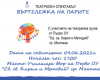
The children’s financial theatre performance The Carousel of Money will be presented to the public in the city of Montana on 9 June at 5:00 p.m. at Sts. Cyril and Methodius Primary School. The young students of teacher Kristina Ignatova have prepared the festive performance with great enthusiasm and inspiration—and, of course, with the financial literacy knowledge they have acquired.
The
-

Rumyana Vitnyova, a long-standing teacher at Kozma Trichkov Secondary School in Vratsa and a member of the team of the Financial Literacy Initiative (FLI) Foundation, has been awarded the prestigious “Neofit Rilski” honorary distinction for her many years of outstanding, highly professional work in the system of pre-school and school education. She received the honorary certificate at an official
-

-
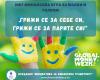
FLI’s new game is dedicated to the theme of this year’s edition of the global initiative “Take Care of Yourself, Take Care of Your Money!”. Its message is that through responsible behavior and care for ourselves, our health, our belongings, and the environment, all of us—both children and adults—can support the family budget. Suitable for use at home, in the classroom, in a library, or in a community
-

On 10 February 2021, the Council of Ministers approved the National Strategy for Financial Literacy and the Action Plan thereto for the period 2021–2025. The strategic documents were prepared within the framework of the Interinstitutional Working Group on Financial Literacy at the Ministry of Finance. The Financial Literacy Initiative Foundation is a member of this group and, through its contribution, provided substantial support to the
-

The family budget under an emergency epidemic situation resembles a modest pizza that we try to enrich with borrowed ingredients, commented Rositsa Vartonik, Executive Director and Founder of the Financial Literacy Initiative Foundation (FLI), in an interview for the Bulgarian News Agency (BTA).
The pandemic has shown that a large share of people are financially vulnerable and has proven the need to have an emergency fund, she added, noting
-
FLI took part in a discussion on “Financial Education in the Digital Era”, organized by the Bulgarian Fintech Association. The event, held on 11 January 2021, brought together representatives of the Ministry of Finance, the Ministry of Education and Science, the OECD, associations from the financial sector, academia, and others. The focus of the discussion was digital financial literacy and the draft National Strategy for
-
The financial literacy play “The Money Carousel” and the innovative method “lesson-performance” were presented as a promising and innovative practice at the international conference organized by the OECD, “Financial Literacy, Financial Resilience, and Digitalization in the CIS”, held on 15–16 December 2020.
Rositsa Vartonik of FLI noted that “The Money
-
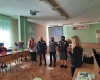
On 24 October in the city of Silistra, FLI conducted training in innovative financial literacy, attended by 26 teachers from the city and the region. The training was carried out with the support of the Regional Department of Education – Silistra. The teachers were introduced to the educational programs and activities developed by FLI, which they can use in their classes in “Technology and Entrepreneurship.” And not
-

The children’s financial theater “The Money Carousel” also “spun” in the village of Pavolche, with the support of Rumyana Vitnyova, in front of an audience on 31 August 2020.
Here is what they share about their preparation in financial literacy and the rehearsals at the Pavolche village library:
“During the Financial Literacy sessions with Rumyana Vitnyova, the children learned how everyone can
-

Is financial discipline alone enough to manage our money? How should we act if our teenagers spend their monthly “pocket money” in just a few days? These and other questions were discussed by Rositsa Vartonik of the Financial Literacy Initiative (FLI) in a conversation with the host of the program “Ask BNT”, Mira Dobreva.
Watch the full conversation!
-

Rumyana Vitnyova, a teacher and member of the team of the Financial Literacy Initiative Foundation (FLI), commented in a conversation with Katya Vasileva on Bulgarian National Radio:
“It is never too early to start a conversation about money, about managing financial resources, and in general about children’s attitudes toward money. Now is a particularly appropriate time for this, because regardless of what our children will do in
-
All of us—parents and children alike—are spending time together at home, going through the restrictions related to the state of emergency and the viral pandemic. A crisis can also be a teacher, albeit a harsh one. We have all learned firsthand how important prudent financial behavior is: the ability to save and consume responsibly, not to live beyond our means, and to service our obligations regularly. The crisis also gives us an
-

-

The second edition of “National Finansiada 2020”—a financial literacy competition for children and parents organized by Bank DSK—has officially launched. The Financial Literacy Initiative Foundation is once again a partner in DSK’s initiative.
Following the successful 2019 edition, DSK is expanding this year’s initiative by adding another student age group. As a result, younger students
-

A true celebration was created by the wonderful children of Class 4B, together with their class teacher Boryana Popova, from Mati Bulgaria Primary School. The children are also the “creators” of the beautiful stage set.
-

Our children’s financial literacy play “The Money Carousel”, written by Teodora Panayotova, is among the six best plays in the country on the theme of “Money”. It was recognized in the competition for a new play on the theme “Money”organized by New Bulgarian University.
This recognition is especially valuable for the Financial Literacy Initiative Foundation. It shows us that we are on the
-

—
“And they lived happily ever after…” — even the most hardened pessimist probably secretly hopes their own personal fairy tale will end this way. But even if you are convinced that love conquers all, it doesn’t hurt to give it a helping hand by paying attention to a much more down-to-earth aspect of life — money. After all, financial problems are among the top three reasons for
-

In a conversation with host Eli Penchukova, Rositsa Vartonik of the Financial Literacy Initiative (FLI) stated:
“Through the active games in our programs—through doing and experiencing—children do not only acquire knowledge. They form sustainable behavioral models in relation to money management. This is particularly important, as managing money is to a large extent a matter of behavior and habit. Talking with children about
-

“There are expectations of rising inflation, largely linked to the pandemic situation and the measures governments are taking to support citizens and businesses,” commented Rositsa Vartonik on the programme “Our Afternoon” on BSTV. Securing the necessary funds generally happens in two ways—by taking on new public debt and by printing money. However, she stressed that we must be aware this
-

A new beginning usually brings hope for something better. Most people see the new year as an opportunity to reset their lives and achieve success—as they define it themselves. Success may have a financial dimension, but it is also connected to how we perceive ourselves and the world around us. Here are our 10 tips that can help you achieve your personal success in the new year:
1. Invest in Yourself!
There is no better way to
-
—
In a “sweet” way — using candies — tenth-grade students from John Atanasoff Vocational High School in Targovishte entered the world of investments during a lesson held as part of the Careers Week. The workshop “Simple Interest, Compound Interest” is part of our program “About Money and Other Important Things: Teen” and represents an innovative, active learning game
-

Once again, the performance “Money Carousel” was presented to great acclaim—this time in the city of Vratsa. More than 200 audience members enjoyed the play and the talented children from Kozma Trichkov Secondary School on 11 December 2019.
-

On the occasion of Banker’s Day (6 December), a competition on the topic “Credit – Pros and Cons,” or when it is appropriate to take out a loan and when it is better to rely on personal savings, was held at the Vocational High School of Light Industry and Tourism in Kazanlak.
The activity is based on a game from our program “About Money and Other Important
-

More than 30 teachers of “Technology and Entrepreneurship” were introduced to the innovative teaching methods of the Financial Literacy Initiative Foundation (FLI) during a methodological meeting organized by the Ministry of Education and Science.
Rositsa Vartonik and Rumyana Vitnyova presented the Foundation’s financial literacy programs, a range of online tools,
-
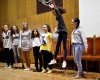
The national tour passed through three Bulgarian cities—Veliko Tarnovo, Ruse, and Varna. In December, the theatre will visit Montana.
924 kilometers traveled by 24 young actors and singers from the theatre troupe of Kozma Trichkov Secondary School in Vratsa, three performances, and audiences of nearly 600 children—this is the numerical expression of the adventure that was the national tour of “The
-
The national tour comes in response to the strong interest in this unconventional method of teaching financial literacy—through theatre.
The innovative performance “Money Carousel” will be presented by a student theatre group from Kuzma Trichkov Secondary School, Vratsa, in four cities across the country. The first stop of the tour is Veliko Tarnovo on 5 November at 6:00 PM in
-

“Education is the best investment,” said Benjamin Franklin. These words are especially relevant today, when our life achievements depend to a very large extent on education—not only the education we receive at school and university, but also on lifelong learning.
Successfully navigating the modern world requires us to possess both professional knowledge and skills that allow us to earn a living, as well as a number of
-

The following situation is not uncommon: you have several loans and outstanding amounts on your credit card. At the same time, you know it is good to have some money set aside, so you make an effort to grow your savings in the bank.
What’s wrong with that? The answer is: it depends. It is important to look closely at the details… or more precisely, at the interest rates—those on your loans and those on your
-
Bulgarians, in general, are willing to sacrifice a great deal of personal comfort in order to boast a luxurious “four-wheeled” acquisition. Is that sensible? Hardly. And yet, the question remains: how do we determine how much we can afford to pay for the desired car without putting unnecessary strain on our budget?
Here is how you can approach this, following these popular “golden rules”:
The
-

You have entered the mature stage of your life. For many of you, the expenses related to raising children and building a family home are already behind you. However, this period comes with its own challenges—financial ones included.
Here is our advice on some of the most important aspects of personal finance, depending on your age.
When You’re 40+: “A Breathing Space”
You are likely at the peak of your career,
-

Every season of human life comes with its own beauty and its own challenges. And whether we like it or not, money is part of our lives—part of the small and big events that shape them. That’s why it’s important not only to understand the basic principles of managing our money, but also to know what to focus on depending on our age—or, more accurately, the life stage we are in.
Here is our advice on some of the most
-

Today, the play “Money Carousel” was met with enthusiastic applause from the audience at the Drama Theatre in Vratsa. The young actors from Kozma Trichkov Secondary School moved and delighted the audience, while also teaching them how to manage money in order to achieve their dreams.
Rositsa Vartonik, Executive Director of the Financial Literacy Initiative Foundation, presented awards for contributions to
-

-

DSK Bank’s digital educational initiative “National Finansiada” continues with its second edition under the name “Summer Finansiada.” The summer edition is a natural continuation of the successful financial olympiad held earlier in the year, which brought together hundreds of teams of parents and students (ages 16–19) from across the country. The Financial Literacy Initiative
-

The first children’s financial play of its kind, “Money Carousel,” was staged on March 17 at the Slavyanska BesedaTheatre by students from Kozma Trichkov Secondary School in Vratsa. It was met with exceptional interest and many smiles from young audience members and their parents. They followed the story of little Ani, who gave up insisting that her father buy her a castle after learning about and
-

SHE does so many things with ease: with love she melts hardened hearts, with a smile she gives wings to her children, with the skills of a top manager she manages to keep both family and professional matters in order… The list could go on for a long time.
But life places one more requirement on women—to be financially literate, and to an even greater extent than their “stronger” halves. It may sound strange, after all
-
-

-

-

-
-
-

-

-

-
-
-
-

-

-

-

-

-
-
-
-
-

-
-
-
-
-
-

-
-
-
-
-
-
-
-
-
-
-
-
-
-

-
-

-
-
-
-
-
-
-


